
India is one of the most rewarding countries in the world to explore on four wheels — or two. A road trip in India is not just travel; it is an experience that changes how you see the country, yourself, and the open road. From the wind-whipped passes of the Himalayas to the spice-scented coastal highways of Kerala, every kilometer tells a different story.
But planning a road trip in India is not the same as planning one in Europe or North America. The terrain is dramatic, the traffic is unpredictable, the permits can be confusing, and the rewards are unlike anything else on earth. This guide covers what most travel blogs skip — the real planning framework that turns a good idea into an unforgettable journey.
Step 1: Choose Your Route Wisely (Not Just What Looks Good on Instagram)
Most travelers pick a route based on aesthetics alone. Smart road trippers pick based on season + skill + duration.
Here are the 10 best road trips in India categorized by traveler type:
- For the adventure seeker: Manali to Leh (490 km) — crossing Rohtang La, Baralacha La, and Tanglang La, some of the highest motorable passes in the world. Open June to September only.
- For the coastal romantic: Mumbai to Goa (600 km) — sweeping shorelines, cashew farms, and sunset stops on the Konkan coast.
- For the culture hunter: Delhi to Jaisalmer (800 km) — forts, havelis, camel tracks, and desert silence.
- For families: Bangalore to Coorg (250 km) — misty coffee estates, waterfalls, and smooth roads.
- For the spiritually inclined: Delhi to Rishikesh via Haridwar (260 km) — the Ganga ghats and Himalayan foothills in a single weekend.
- For the offbeat explorer: Spiti Valley Circuit from Shimla to Manali (450 km) — a raw, high-altitude desert that rewards patience.
- For wildlife lovers: Nagpur to Kanha National Park (260 km) — tiger territory through Central India’s heartland.
- For history buffs: Hyderabad to Hampi (380 km) — ruins of the Vijayanagara Empire that stop you in your tracks.
- For the Northeast pioneer: Guwahati to Tawang (550 km) — Arunachal Pradesh’s dramatic landscape, including Sela Pass at 13,700 feet.
- For the classic road tripper: Chennai to Pondicherry (170 km) — the East Coast Road, India’s most scenic short drive.
Step 2: Understand the Permit System (What Nobody Tells You)
This is where most first-timers get blindsided. India has a layered permit system for certain regions, and ignoring it can get you turned back at a checkpoint.
- Inner Line Permit (ILP): Required for all Indian citizens traveling to Arunachal Pradesh, Nagaland, Mizoram, and Manipur. Apply online before departure.
- Ladakh permits: Foreign nationals need a Protected Area Permit (PAP) for areas like Nubra Valley, Pangong Lake, and the Dah-Hanu region. Indian citizens do not need a permit but must register at checkpoints.
- Rohtang Pass: Requires an online permit (issued by the Himachal Pradesh government) due to environmental regulations. Only a limited number of vehicles are allowed daily.
- Forest area permits: Some wildlife corridors and forest zones in states like Uttarakhand and Madhya Pradesh require separate entry permits.
Pro tip: Always carry physical printed copies of permits alongside digital versions. Network connectivity disappears in remote areas, and checkpoint officials may not accept screenshots.
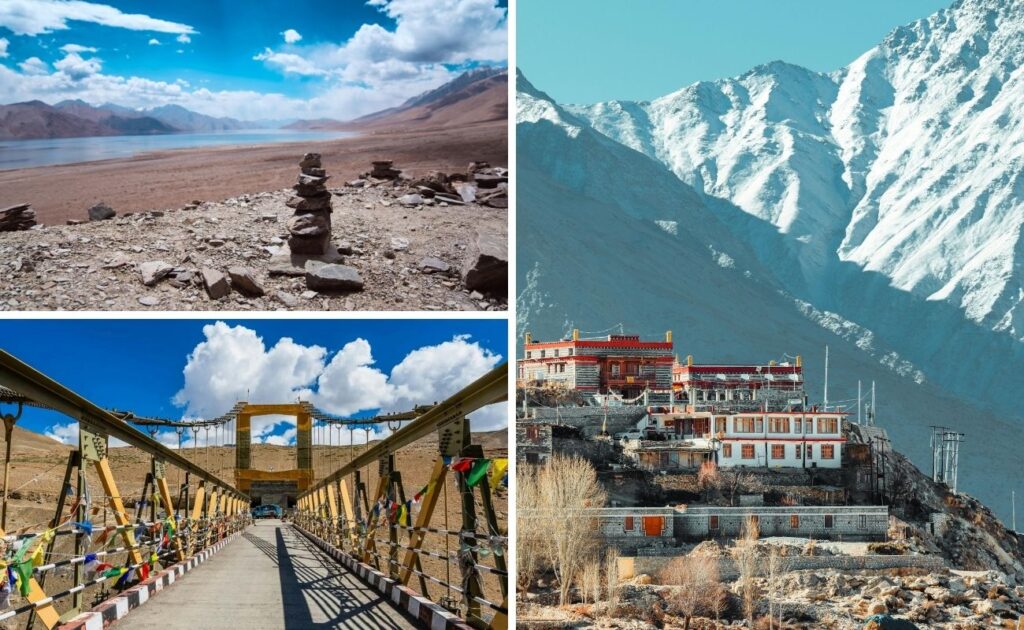
Step 3: The Leh Ladakh Road Trip — A Special Deep Dive
No guide on the best road trips in India is complete without giving the Leh Ladakh road trip the space it deserves — because it is genuinely unlike any other drive on the planet.
Two entry routes:
- Manali–Leh Highway (NH3): 490 km, open June to mid-October. Passes through Sarchu, Pang, and the dramatic More Plains.
- Srinagar–Leh Highway (NH1): 434 km, usually opens earlier (May) and closes later. Passes through Sonamarg and Zoji La.
What most blogs miss:
- Acclimatization is non-negotiable. Altitude sickness (AMS) is real and can be fatal. Plan a rest day in Keylong or Sarchu on the Manali route, and spend at least 2 full days in Leh before heading higher.
- Fuel planning: There is only one petrol pump between Tandi (near Keylong) and Leh — approximately 365 km apart. Carry a government-approved jerry can with extra fuel.
- The Atal Tunnel advantage: Opened in 2020, the 8.8 km Atal Tunnel under Rohtang Pass keeps the Manali–Leh corridor accessible even when the Rohtang Pass itself is snowbound, extending the travel season by weeks.
- Mobile connectivity: BSNL is the only network with intermittent coverage in most of Ladakh. Inform family of your itinerary before you lose signal.
Best time for Leh Ladakh road trip: Mid-June to mid-September.
Step 4: Vehicle Preparation — The Details That Save Your Trip
A serviced vehicle is your most important travel companion. Get your car checked at least 10–14 days before departure (not the day before — parts may need ordering).
Critical checks:
- Tyre condition and pressure, including the spare
- Brake pads (especially important for mountain routes)
- Engine coolant, brake fluid, and engine oil levels
- Battery health
- All lights, wipers, and horn
Documents to keep in a single folder:
- RC (Registration Certificate) — original
- Driving Licence — original
- Insurance papers (comprehensive coverage recommended)
- PUC (Pollution Under Control) certificate
- FASTag with sufficient balance
- Any applicable permits
What to carry in the car:
- Spare tyre + jack + puncture kit
- Tow rope
- Small fire extinguisher
- Jump cables
- Basic first aid kit with altitude sickness medication (Diamox) for Himalayan routes
- Offline maps downloaded on your phone (Google Maps, Maps.me)

Step 5: Budget Planning That Actually Works
Indian road trips can cost anywhere from ₹1,500 to ₹6,000 per person per day depending on your choices. Here is a realistic breakdown:
| Expense | Budget | Mid-Range | Comfort |
|---|---|---|---|
| Fuel (per 100 km) | ₹600–800 | ₹800–1,200 | ₹1,200+ |
| Accommodation (per night) | ₹500–1,000 | ₹1,500–3,000 | ₹4,000+ |
| Food (per day) | ₹300–500 | ₹600–1,000 | ₹1,200+ |
| Tolls + permits | ₹200–400 | ₹400–800 | ₹800+ |
Money-saving tips most guides skip:
- Book accommodations in advance for peak-season routes (June–August for Ladakh, November–February for Rajasthan).
- Dhaba meals are often fresher and more authentic than highway restaurants — and significantly cheaper.
- Avoid driving into toll plazas without FASTag; cash lanes are slower and occasionally charge more.

Step 6: On the Road — Driving Culture and Safety
India’s roads have a personality of their own. Understanding driving etiquette is not optional; it is a survival skill.
- Never drive at night in remote areas. Most road accidents on mountain highways happen after dark due to unlit stretches and unmarked curves.
- Animals own the road. Cows, dogs, goats, and occasionally elephants will appear without warning. Reduce speed in rural areas.
- Horn culture: In India, honking communicates position and intent — not aggression. Use it, especially while overtaking on blind curves in the hills.
- Avoid overtaking on curves, bridges, or crests — visibility is zero and the oncoming driver won’t see you.
- Share driving duties on trips longer than 500 km per day. Fatigue is the leading cause of highway accidents.
Step 7: The Experiences You’ll Miss If You Only Follow the Route
The best moments of a road trip in India rarely happen at the destination. They happen between points on the map.
- Pull over for chai at a roadside stall — the ones with the plastic chairs and the smoke-blackened kettle.
- Stop at local weekly markets (haats) that don’t appear on Google Maps but are signposted on state highways.
- Spend a night at a village homestay instead of a highway hotel — especially in Himachal Pradesh, Uttarakhand, and Coorg, where community tourism is thriving.
- Ask the dhaba owner what they recommend, not a menu. The answer is almost always better.
Final Word: Plan the Framework, Leave Room for the Unexpected
The most memorable road trips in India are not the perfectly executed ones. They are the ones where you found an unmarked waterfall, helped a stranger with a flat tyre, or took a wrong turn that led to a monastery at sunset.
Plan your route, prepare your vehicle, sort your permits, and budget honestly. Then trust the road to do the rest. India rewards curious, prepared, and patient travelers more than any guidebook ever could.
Whether it’s the iconic Leh Ladakh road trip, a coastal drive from Mumbai to Goa, or a desert loop through Rajasthan — the open road in India is always worth it.
For More Information: Visit Trips Travel